ABS was selected for its excellent impact resistance and moldability
Equipment and Materials Summary
- Machine: Benchtop injection molder with reliable clamping and precise heating zones.
- Mold: Single-cavity aluminum (hemispherical shape).
- Material: White ABS pellets.
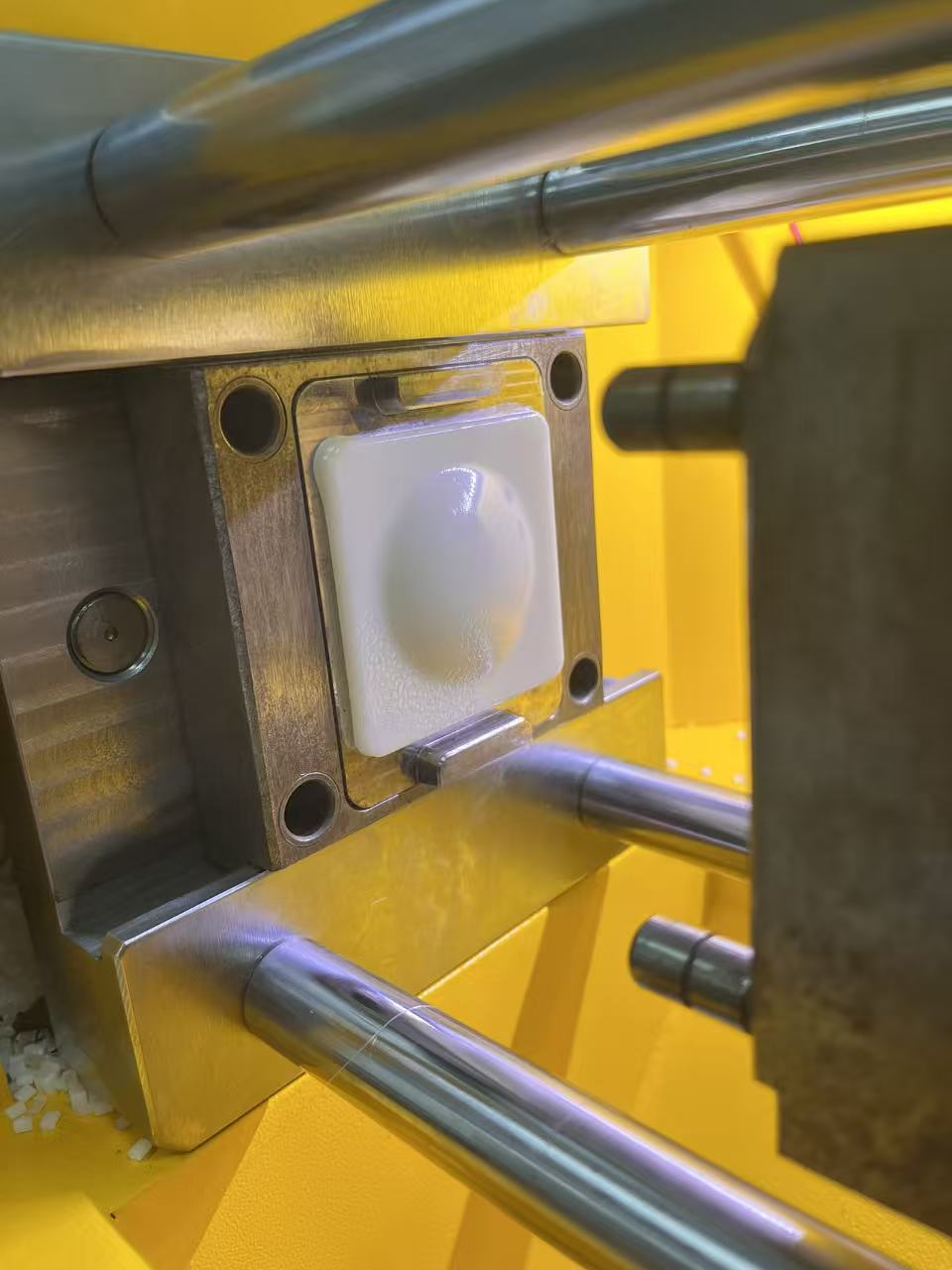 : Shows the mold opening post-injection, revealing a pristine hemispherical part.
Detailed Process Workflow with Recorded Parameters
1. Material Preparation (Drying Phase)
Moisture absorption in ABS can cause voids or surface haze—pre-drying is non-negotiable.
- Drying temperature: 85°C (gentle to prevent degradation).
- Drying duration: Approximately 2.5 hours. Personal note: Skipping or shortening this step once led to subtle surface blemishes in a trial run; restoring full duration resolved it completely.
2. Mold Setup and Clamping
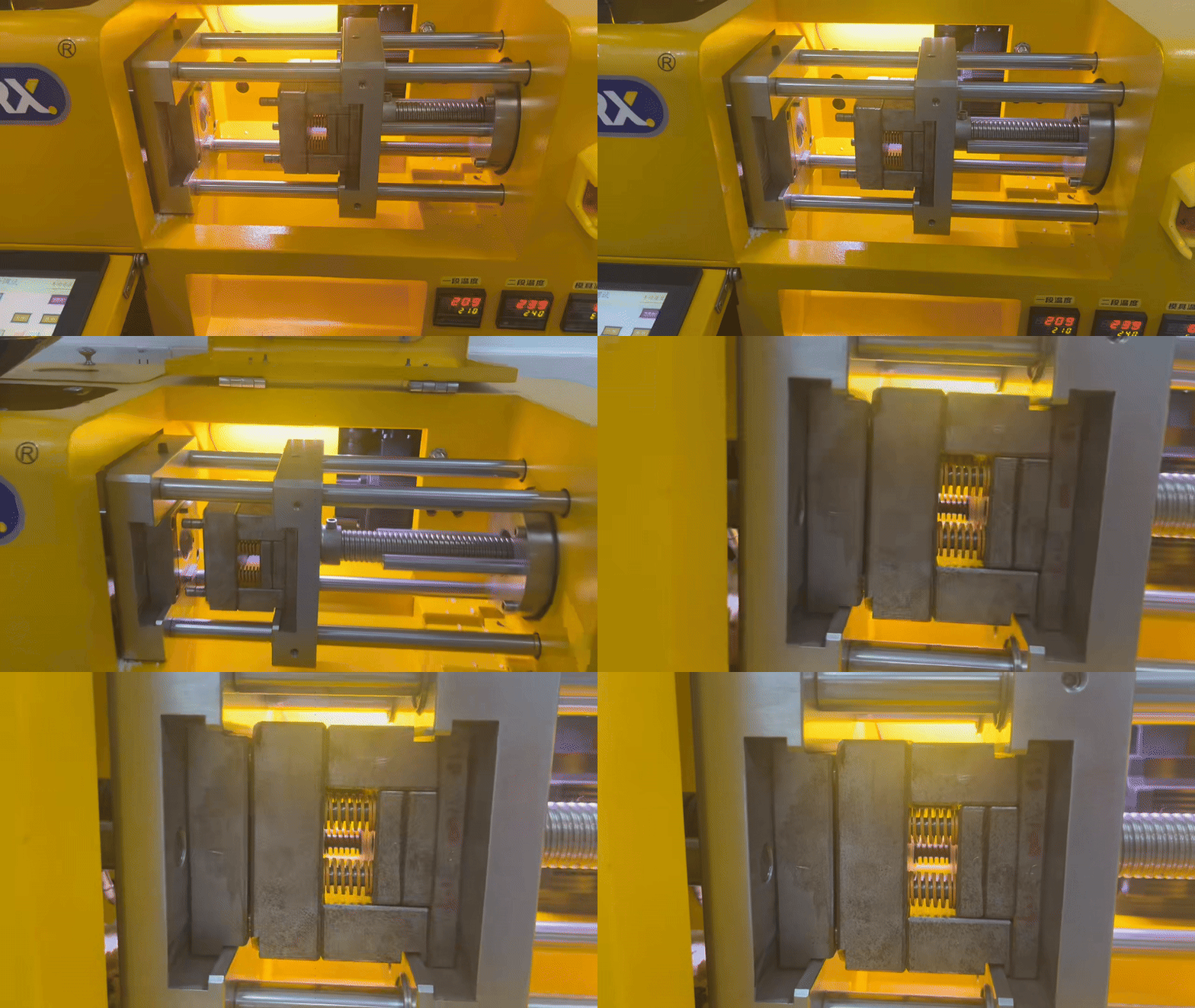
- Secure the aluminum mold on the platform, aligning perfectly with the four guide pillars.
- Apply uniform clamping force to prevent flash during high-pressure injection.
3. Melting and Injection Phase (Core Parameters)
Temperature zoning and injection dynamics were iteratively refined for optimal fill:
- Zone 1 temperature: 180°C (pre-melt for uniform plastication).
- Zone 2 temperature: 220°C (injection zone for superior flow).
- Injection duration: 6.5 seconds (precise timing to avoid overpack or short shots).
These settings ensured smooth material flow into the hemispherical cavity without turbulence.
4. Cooling, Demolding, and Part Extraction (Image Focus)
- Cooling method: Ambient air cooling (2-3 minutes).
- Demolding highlight (the defining moment):
- Smooth mold separation reveals a fully formed white hemisphere retained cleanly in the cavity.
- Surface exhibits mirror-like gloss with minimal gate marks and no visible warpage, shrinkage, or flow lines.
- Clean release indicates excellent mold surface finish and balanced cooling.
Personal Reflections and Improvement Strategies
- Parameter Sensitivity: A 10°C increase significantly boosts flow, but exceeding 230°C risks material scorching. Future experiments should log systematic gradients for a comprehensive parameter map.
- Defect Mitigation: Success here stemmed from thorough drying and speed fine-tuning. Short shots can be countered by adding hold pressure (manual extension on this machine).